
Stop Overcompressing Your Mixes: Why Headroom Matters More Than Loudness
One of the most common mistakes new producers and engineers make is overcompressing their mixes in an attempt to make everything sound louder, bigger, and more “professional.” While compression is one of the most powerful tools in music production, using too much of it can destroy the life, dynamics, and clarity of a mix.
If your mixes sound flat, harsh, distorted, or fatiguing after a few minutes of listening, there’s a good chance you’re overcompressing and not leaving enough headroom.
What Is Compression?
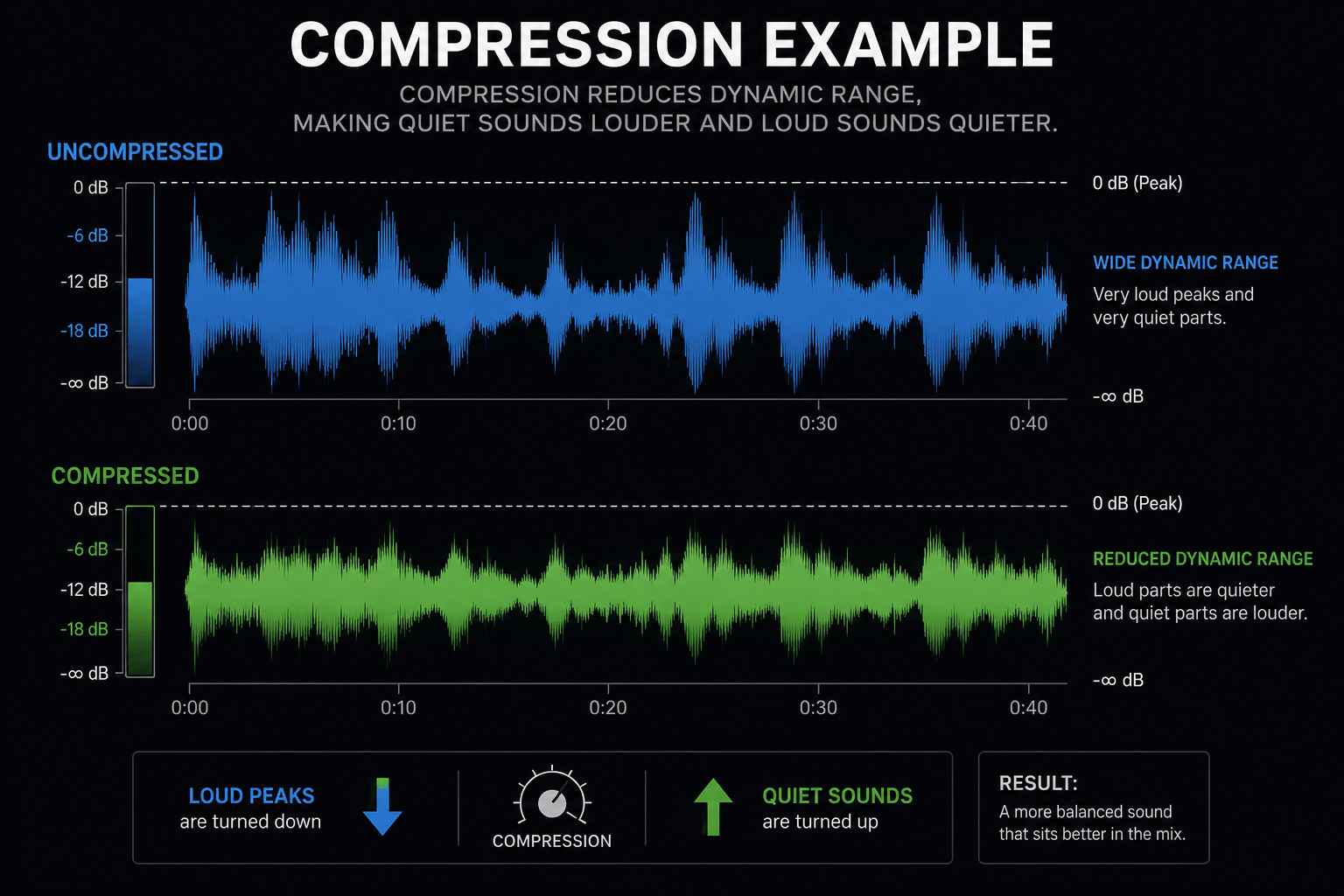
Compression reduces the dynamic range of an audio signal. In simple terms, it lowers the loudest parts of a sound and raises the quieter parts, helping instruments feel more controlled and consistent in a mix.
- Add punch to drums
- Smooth out vocals
- Glue instruments together
- Increase sustain
- Improve overall balance
Used properly, compression can enhance a mix and make it sound polished. But when overused, the mix loses movement, emotion, and clarity.
The Problem With Overcompression
A heavily compressed mix may sound impressive for the first 10 seconds, but over time it becomes tiring to listen to. This is because dynamics are what give music impact and energy.
When every sound is pushed to maximum loudness:
- Drums lose punch
- Vocals sound squashed
- Bass becomes muddy
- Transients disappear
- The mix starts distorting
- Everything competes for space
Music needs contrast. Loud sections only feel loud because quieter moments exist.
Why Headroom Is Important
Headroom is the amount of space between your mix’s peak level and 0 dBFS (digital clipping).
Leaving headroom gives your mix room to breathe and allows mastering engineers to properly enhance the track without distortion or unnecessary limiting.
Recommended Mixing Targets
- Peak Levels Around -6 dB
- Integrated Loudness Around -18 to -14 LUFS
This doesn’t mean your mix is weak — it means your mix is healthy.
The Loudness Myth
Many producers chase loudness too early in the process. They place limiters and compressors on the master bus while still building the mix, crushing the dynamics before the song is even finished.
The truth is: a clean, dynamic mix will sound bigger and more professional after mastering than a distorted mix that was pushed too hard from the start.
Streaming platforms like Spotify, Apple Music, and YouTube also normalize loudness automatically. Extremely loud masters often get turned down anyway, meaning all that sacrificed dynamics were wasted.
Tips for Better Dynamic Mixes
1. Use Compression With Purpose
Don’t compress just because you think you should. Ask yourself:
- What problem am I solving?
- Do I need control, sustain, punch, or tone shaping?
2. Watch Your Gain Reduction
If your compressor is constantly reducing 8–10 dB or more, you may be overdoing it. Sometimes 2–4 dB is all you need.
3. Preserve Transients
Fast attack times can kill the natural punch of drums and instruments. Let transients breathe when possible.
4. Leave Space on the Master Bus
Avoid slamming a limiter during the mixing stage. Keep your master bus clean and leave room for mastering.
5. Trust Your Ears
Meters help, but your ears matter more. If the mix feels small, lifeless, or tiring, back off the compression.
Final Thoughts
Great mixes are not just loud — they are dynamic, emotional, and balanced. Compression should enhance your music, not suffocate it.
Some of the best-sounding records ever made still have dynamics, movement, and space. Learning how to preserve headroom and use compression intentionally is one of the biggest steps toward achieving professional-quality mixes.
“You can always make a mix louder later. You can’t bring the dynamics back once they’re destroyed.”