
3 Tips for Better Recording Levels in Pro Tools
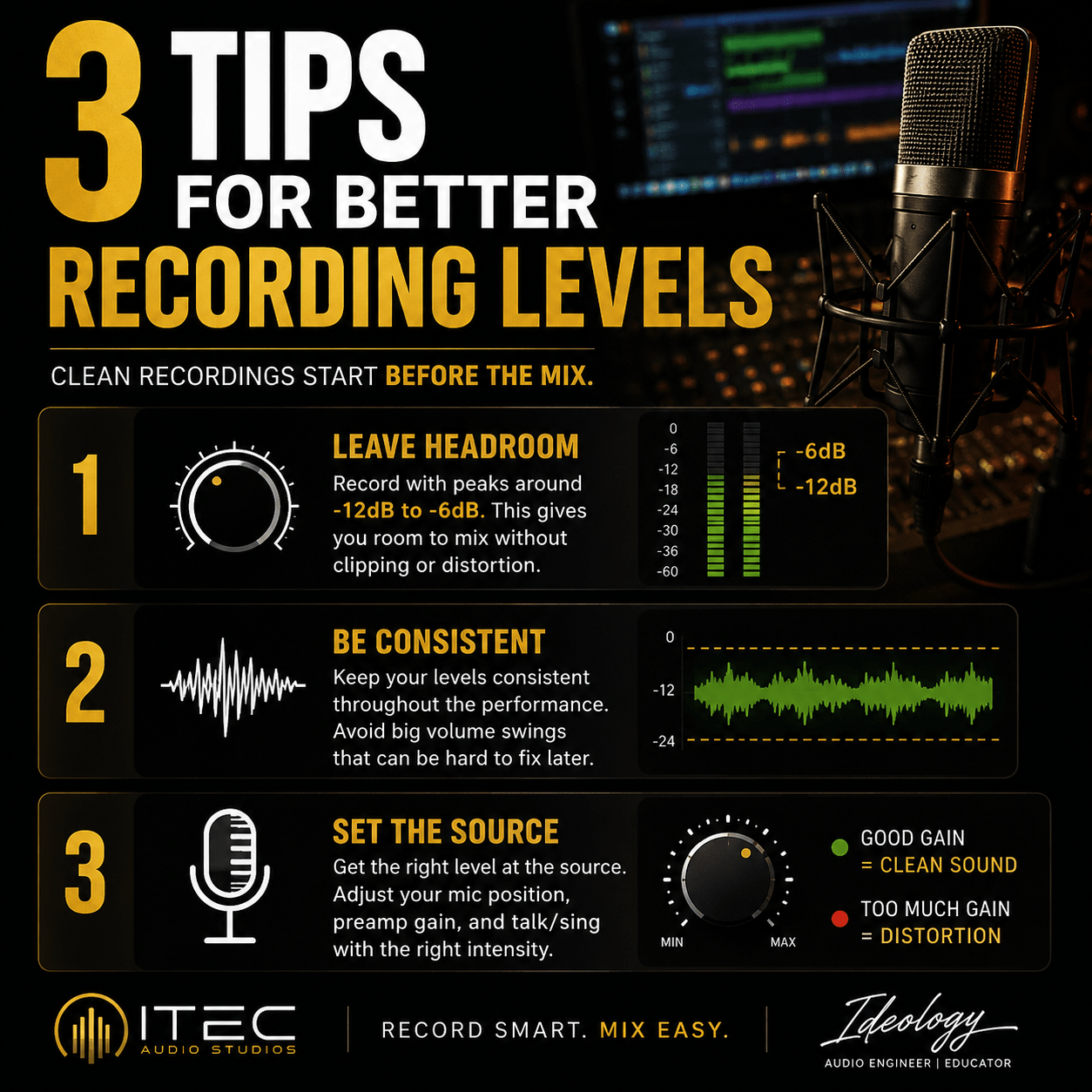
Setting proper recording levels is one of the most important skills in music production.
Whether you are recording vocals, instruments, podcasts, or live sessions in
Pro Tools, understanding proper gain staging and
headroom can dramatically improve your overall sound quality.
When I first started recording music, one of the biggest mistakes I made was recording everything too loud.
I thought pushing the meters close to the red would make my mixes sound more professional.
Over time, I learned that proper recording levels create cleaner mixes, reduce distortion,
and give engineers more flexibility during mixing and mastering.
Every recording session became a teachable moment, and those lessons shaped the way I approach recording today. If you are just getting started with music production or audio engineering, here are 3 tips that can immediately improve your recordings.
1. Follow Proper Gain Staging Rules
One of the most important concepts in audio recording is proper gain staging.
Your goal is to capture a strong signal without clipping or distorting the audio.
A good recording rule to follow:
- Keep average levels between -18dB and -12dB
- Allow peaks to hit around -6dB
- Avoid recording in the red
Many beginner producers think louder recording levels are better, but modern digital recording systems actually perform better when there is enough headroom available.
Proper gain staging helps:
- Reduce distortion
- Prevent clipping
- Create cleaner mixes
- Improve plugin performance
- Preserve audio quality
2. Use Your Ears More Than Your Eyes
Meters are important, but your ears should always be the final judge during a recording session.
Sometimes audio levels may look fine visually, but still sound distorted because the microphone preamp, audio interface, or performer is pushing the signal too hard.
Listen carefully for:
- Harsh vocals
- Unwanted distortion
- Compressed sounding instruments
- Overloaded microphone inputs
Training your ears is one of the fastest ways to improve as an audio engineer and music producer.
3. Do Not Be Afraid to Experiment
Every engineer develops their own recording workflow through experience and experimentation.
As a youngster, I made a lot of mistakes during my first several recording sessions, but every mistake taught me something valuable.
Experimenting helped me better understand microphones, signal flow, room acoustics, compression, and vocal recording techniques.
Try experimenting with:
- Microphone placement
- Input gain levels
- Recording chains
- Vocal distance techniques
- Monitoring levels
The more you experiment, the faster you grow as a producer, artist, or engineer.
Final Thoughts
Recording is both technical and creative. Understanding proper recording levels will improve your sessions immediately, but experience is what truly sharpens your skills over time.
Do not get discouraged by mistakes. Every session is an opportunity to learn something new.
Stay consistent, trust the process, and continue creating.
Learn Pro Tools Recording Techniques at Itec Audio Studios
Want to learn professional recording, mixing, and music production techniques using industry-standard workflows?
Explore our Pro Tools Certification Courses and hands-on audio engineering training programs at: